


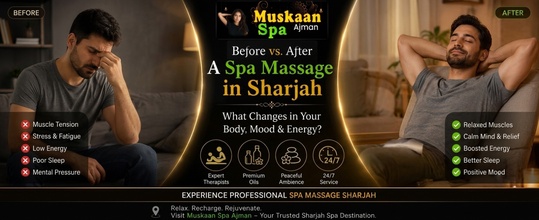
You clock out after a long shift, or you rack the last set at the gym, and your shoulders feel like they’ve been welded into place. Your lower back is tight from sitting through traffic on Al Ittihad Road. Your head is still running through tomorrow’s to-do list. This is the state a lot of men in Sharjah walk in with before a massage session — and it’s worth understanding what actually shifts by the time they walk back out.
A spa massage in Sharjah isn’t a magic reset button, but the before-and-after difference is real enough that most people notice it within minutes of the session ending. This article walks through that journey stage by stage — before, during, immediately after, a few hours later, and the next day — so you know what to realistically expect, not what a brochure promises.
Before a Spa Massage in Sharjah: How Does the Body Usually Feel?
Most men arrive at a massage already carrying some form of physical or mental load. It’s rarely dramatic — just the accumulated effect of a normal week.
Common patterns include:
- Tight shoulders and upper back from desk work or driving
- Stiff hips and lower back after long hours sitting in meetings or in the car
- Sore legs or forearms from a gym session, sport, or physical labor
- General fatigue that doesn’t go away with a night’s sleep
- A mind that’s still half-occupied with work, even when you’re trying to switch off
None of this is unusual. It’s simply the baseline a lot of people are working from when they book a spa massage in Sharjah — and it’s the starting point this comparison is built around.
What Happens During a Spa Massage?
The middle of the session is where the shift from “wound up” to “settled” starts to happen, though how it feels depends heavily on the technique and pressure used.
A therapist typically works through major muscle groups — shoulders, back, legs, sometimes hands and feet — using pressure that ranges from light and gliding to firm and targeted, depending on what you’ve asked for. Breathing tends to slow down naturally as the body registers that it isn’t under any demand. Muscles that were holding tension without you consciously noticing often start to release, one region at a time rather than all at once.
This is also where individual differences show up the most. Someone who prefers deep tissue work will have a very different in-session experience than someone who wants a lighter, relaxation-focused touch. Neither is more “correct” — it depends on your goal and how your body responds to pressure.
Immediately After a Spa Massage: What Feels Different?
This is usually the most noticeable stretch of the whole experience, and it’s worth breaking down by category.
Body
Right after a session, many people report that their muscles feel looser and less “locked.” Movements like rolling the shoulders, turning the neck, or bending forward can feel easier than they did an hour earlier. Some describe a sense of being physically lighter, even though nothing has changed in terms of actual body weight.
Mood
There’s typically a calmer, less reactive state of mind immediately afterward. Day-to-day stress doesn’t disappear, but it often feels less urgent or heavy in the moment. This is a common and well-documented short-term effect of relaxation-focused touch, though it’s worth being clear that this is a temporary shift in perceived stress, not a treatment for any underlying condition.
Energy
Energy responses vary more than people expect. Some men leave feeling refreshed and alert, ready to get on with the rest of their day. Others feel noticeably drowsy or want to sit quietly for a few minutes before driving or heading back to work. Both reactions are normal — it depends on your nervous system, how tense you were going in, and even what time of day the session happened.
The one constant across all three categories: individual experiences vary, and there’s no single “correct” way to feel right after a massage.
A Few Hours Later: Does the Feeling Change?
Yes, and usually in a gradual, unremarkable way rather than a dramatic one.
A few practical points worth keeping in mind for this window:
- Hydration matters, but keep it simple. Drinking water at a normal pace supports how you feel post-massage — there’s no need to overdo it, and claims about massage “flushing toxins” from the body aren’t something reliable evidence supports.
- Ease back into intensity. If you’re planning a heavy gym session or a physically demanding task right after, it may be worth giving your body a little time first, especially if the massage involved firmer pressure.
- Pay attention to how you actually feel, rather than how you think you’re supposed to feel. Some people stay in a relaxed, low-key state for hours. Others bounce back to full alertness within thirty minutes.
- Return to your normal routine when it feels right — there’s no fixed waiting period that applies to everyone.
The Next Day: What Can You Expect After a Massage?
By the following morning, most people fall into one of two broad categories.
Many feel genuinely refreshed — less aware of the everyday muscle tension they’d stopped noticing because it had become background noise. Movement can feel a bit freer, and the general sense of physical “heaviness” from before the session is often reduced.
Others, particularly after a firmer or deep-tissue-style massage, notice mild tenderness in the areas that were worked on — similar to how muscles can feel after a solid workout. This usually settles on its own within a day or so.
It’s worth being direct here: if pain, tenderness, or stiffness is significant, doesn’t improve within a couple of days, or you’re dealing with a specific injury, that’s a signal to check in with a doctor or physiotherapist rather than relying on massage alone. A massage session is a wellness tool, not a substitute for medical care.
Before vs. After a Spa Massage in Sharjah – Quick Comparison
| Before | After |
| Muscle tension is often noticeable, especially in shoulders, back, and legs | Muscles typically feel more relaxed and easier to move |
| Work or workout fatigue builds up over the day | Many people report a stronger sense of physical relaxation |
| Mental stress feels present and hard to switch off | Mood is often calmer, with stress feeling less immediate |
| General physical tiredness | Some people feel refreshed; others feel pleasantly drowsy |
| Little dedicated time set aside for recovery | A defined block of time focused purely on the body resetting |
This table is a general pattern, not a guarantee — how each person responds depends on their body, the massage style used, and how tense or fatigued they were to begin with.
What Should Men Do Before a Spa Massage?
A few practical steps make a real difference to the quality of the session. Arrive a little early rather than rushing straight from work, tell the therapist about any specific areas of tension or discomfort, and be upfront about your pressure preference from the start rather than adjusting halfway through.
Beyond that:
- Avoid arriving right after a heavy meal — a light meal or gap of an hour or two tends to be more comfortable
- Stay reasonably hydrated during the day, without overdoing it right before the session
- Wear something comfortable to and from your appointment
- Speak up early if the pressure feels too intense or too light — this isn’t something you need to just tolerate
What Should Men Do After a Spa Massage?
Keep it simple: drink water at a normal pace, give yourself a few minutes before rushing back into a packed schedule, and notice how your body responds before deciding what’s next.
Practical points to keep in mind:
- If you feel unusually relaxed or a little sore, it may be worth holding off on an intense workout for a few hours
- Pay attention to which areas feel looser and which might still need attention over time
- There’s no need to follow a strict “detox protocol” — normal hydration and rest are enough for most people
- Ease back into your regular routine at whatever pace feels right for you
Which Massage Is Right for You?
The right choice really comes down to what you’re trying to get out of the session.
If your main goal is relaxation — winding down after a stressful week, switching off mentally — a lighter, relaxation-focused massage is usually the better fit.
If your main concern is muscle tightness — from gym training, physical work, or long hours sitting — a style built around firmer, more targeted pressure tends to address that more directly.
If you’re dealing with limited mobility or want to move more freely — for sport, training, or just day-to-day comfort — a stretching-focused technique may be worth discussing with your therapist.
None of these is medically superior to the others — it’s about matching the technique to your goal, and a good therapist will usually ask about this before starting.
How to Choose a Spa Massage or Massage Center in Sharjah
With a fair number of options for a sharjah massage center, a few practical factors are worth checking before you book, rather than going purely on price or proximity.
- Therapist experience — someone who asks questions about your tension points and adjusts technique accordingly is generally a good sign.
- Hygiene and cleanliness — this should be visibly maintained, not something you have to assume.
- Privacy and a professional environment — you should feel comfortable and respected throughout.
- Range of treatment options — a center offering a few different massage styles gives you room to match the session to your actual goal.
- Clear, upfront pricing — no ambiguity about what you’re paying for before you start.
- Convenient location — somewhere realistically reachable from work or home makes it easier to actually follow through and book again.
- Operating hours that fit around a working schedule, including evenings or weekends.
- Genuine customer reviews — worth a quick read, keeping in mind that experiences vary from person to person.
- Clear communication before treatment — a good center will talk you through pressure, technique, and what to expect before starting, not after.
Taken together, these factors matter more than marketing claims when you’re choosing where to book a body massage in Sharjah.
Frequently Asked Questions
What should I do before a spa massage in Sharjah? Arrive a little early, avoid a heavy meal right beforehand, and be clear with the therapist about your pressure preference and any areas of tension. Staying reasonably hydrated during the day also helps. Wearing comfortable clothing to and from your appointment makes the whole visit smoother, and speaking up early about comfort levels matters more than people often realize.
What should I expect after a body massage?
Most people notice looser muscles, easier movement, and a calmer mood shortly after the session ends. Energy responses vary — some feel refreshed, others feel pleasantly drowsy. These effects are usually temporary and tend to settle into your normal state over the following hours, though the general sense of relaxation can last well into the day.
Is it better to eat before or after a massage?
A light meal an hour or two before a massage is generally more comfortable than arriving right after a heavy one, since lying face-down or on your side with a full stomach isn’t ideal. Eating normally afterward is fine — there’s no need to fast or follow any special post-massage diet.
Can men go to a spa massage in Sharjah?
Yes. Massage is a mainstream wellness practice used by men for muscle recovery, stress relief, and general physical maintenance, not something limited to any particular audience. Many centers in Sharjah offer sessions specifically suited to active, physically demanding lifestyles.
How long does the relaxed feeling after a massage last?
This varies by person, but many people notice a calmer mood and looser muscles for several hours, with some of the benefit still noticeable the next day. Factors like how tense you were beforehand, the massage style used, and your general stress levels all affect how long the feeling holds.
Can I exercise after a massage?
Light activity is usually fine, but it’s worth easing into anything intense, especially after a firmer massage, since muscles may feel more sensitive than usual for a short period. Listening to how your body actually feels is more reliable than following a fixed rule about waiting times.
Which massage is suitable for someone with muscle tension?
A massage style built around firmer, more targeted pressure tends to address noticeable muscle tightness more directly than a light relaxation massage. It’s worth discussing your specific tension points with the therapist beforehand so they can adjust technique and pressure accordingly.
How often should someone get a massage?
There’s no universal answer, since it depends on your activity level, stress levels, and personal goals. Some men book sessions weekly around an intense training schedule, while others find a monthly session enough to manage everyday tension. Paying attention to how your body responds over time is the best guide.